TISSUE SALTS,
SIMPLY DESIGNED.
Mineral-based formulations presented with clarity, quality and purpose.
THE 12 Biochemic TISSUE SALTS

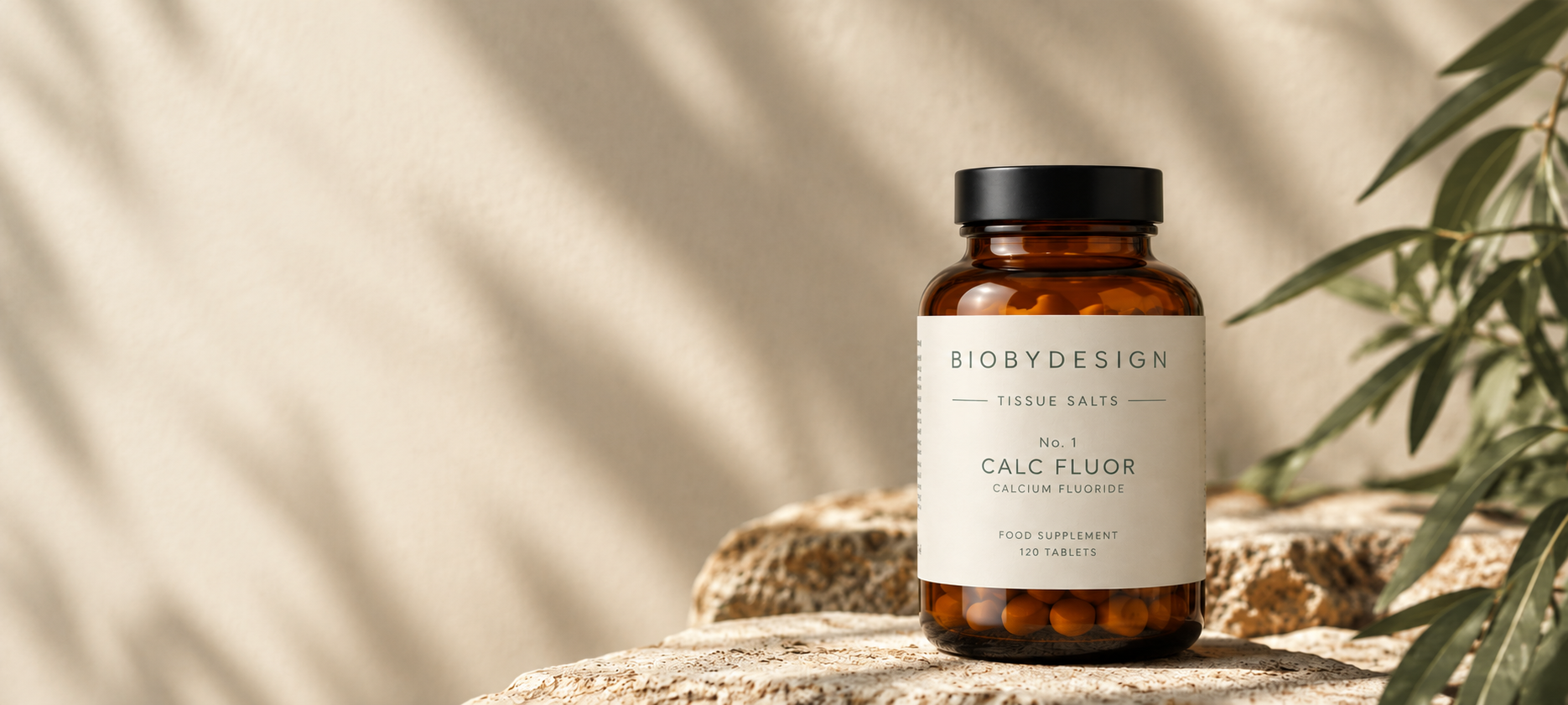
CALC FLUOR & ELASTICITY
What it is
Calc Fluor, traditionally known as Calcarea fluorica, is Tissue Salt No. 1 within the traditional twelve-salt Biochemic system.
Calcium fluoride occurs naturally within the body, and within Biochemic tradition Calc Fluor has long been associated with elasticity, structure and resilience.
TRADITIONALLY ASSOCIATED WITH
Elasticity · Structure · Resilience
Within the traditional Biochemic system, Calc Fluor is associated with tissues where strength and flexibility work together. Traditional Biochemic writings particularly connect this tissue salt with the elastic and structural qualities of the body's tissues.
It has traditionally been discussed in relation to connective tissues, ligaments, tendons, bones and tooth enamel, reflecting its historical association with tissues requiring both firmness and flexibility.
THE BIOCHEMIC PERSPECTIVE
The Biochemic system looks at the twelve tissue salts as an interconnected mineral system rather than as isolated substances.
Calc Fluor occupies a distinctive place within this system because of its traditional relationship with strength, flexibility and structural integrity. It is one of twelve salts, each associated within Biochemic philosophy with different tissues, processes and constitutional patterns.
A BIOBYDESIGN APPROACH
BioByDesign brings the traditional Biochemic system into a clear, contemporary setting.
Each of our twelve Tissue Salts is presented as part of the wider system — helping you understand the individual salt, its traditional associations and its relationship to the other eleven salts.
PRODUCT INFORMATION
Biochemic name: Calc Fluor
Traditional name: Calcarea fluorica
Mineral: Calcium Fluoride
BioByDesign number: No. 1
System: One of the 12 traditional Biochemic Tissue Salts
IMPORTANT INFORMATION
BioByDesign product formulations, directions, regulatory wording and final product information are currently being finalised. Information on this page describes the traditional Biochemic system and should not be regarded as the final product label or directions for use.
Traditional Biochemic associations are provided for educational purposes and are not intended to diagnose, treat, cure or prevent disease or replace appropriate medical advice.

FERR PHOS & VITALITY
What it is
Ferr Phos, traditionally known as Ferrum phosphoricum, is Tissue Salt No. 4 within the traditional twelve-salt Biochemic system.
Ferr Phos combines iron and phosphate, and within the traditional Biochemic system it has long been associated with vitality, circulation and oxygen-related processes.
TRADITIONALLY ASSOCIATED WITH
Vitality · Circulation · Response
Within the traditional Biochemic system, Ferr Phos is particularly associated with the blood, circulation and the body's oxygen-related processes.
Traditional Biochemic writings also place Ferr Phos at the early stages of the body's response to physical stress or disturbance, before more clearly defined patterns have developed.
Historically, Ferr Phos has therefore been discussed within Biochemic literature in connection with tiredness and low vitality, circulation, the early stages of inflammation and fever, and muscular strains and sprains.
THE BIOCHEMIC PERSPECTIVE
Ferr Phos occupies an important position within the twelve-salt system because of its traditional relationship with vitality, circulation and the body's initial response to disturbance.
In traditional Biochemic philosophy, its iron component led to a particular association with the blood and oxygen transport, while its broader role was considered relevant when the body first begins responding to physical stress.
This makes Ferr Phos distinct from salts such as Calc Sulph, which are traditionally associated with later stages of the body's natural processes of clearing and recovery.
A BIOBYDESIGN APPROACH
BioByDesign brings the traditional Biochemic system into a clear, contemporary setting.
Each of our twelve Tissue Salts is presented as part of the wider system — helping you understand the individual salt, its traditional associations and its relationship to the other eleven salts.
PRODUCT INFORMATION
Biochemic name: Ferr Phos
Traditional name: Ferrum phosphoricum
Mineral: Iron Phosphate
BioByDesign number: No. 4
System: One of the 12 traditional Biochemic Tissue Salts
IMPORTANT INFORMATION
BioByDesign product formulations, directions, regulatory wording and final product information are currently being finalised. Information on this page describes the traditional Biochemic system and should not be regarded as the final product label or directions for use.
Traditional Biochemic associations are provided for educational purposes and are not intended to diagnose, treat, cure or prevent disease or replace appropriate medical advice.

KALI SULPH & RENEWAL
What it is
Kali Sulph, traditionally known as Kali sulphuricum, is Tissue Salt No. 7 within the traditional twelve-salt Biochemic system.
Also known as potassium sulphate, Kali Sulph has long been associated within Biochemic tradition with renewal, skin and oxygen-related cellular processes.
TRADITIONALLY ASSOCIATED WITH
Renewal · Skin · Cellular Balance
Within the traditional Biochemic system, Kali Sulph is particularly associated with the skin, epithelial tissues and the later stages of the body's response to disturbance.
Traditional Biochemic writings frequently discuss Kali Sulph where yellowish secretions, scaling or changing skin conditions form part of the traditional picture.
Historically, it has also been discussed in connection with the later stages of inflammatory processes, particularly where the body's natural processes of renewal and resolution are taking place.
THE BIOCHEMIC PERSPECTIVE
Kali Sulph occupies a distinctive position within the twelve-salt system because of its traditional relationship with cellular renewal, the skin and oxygen distribution within the tissues.
Traditional Biochemic philosophy often describes a progression between Ferr Phos, Kali Mur and Kali Sulph: Ferr Phos being associated with the initial stage of disturbance, Kali Mur with the second stage, and Kali Sulph with the later stage of resolution and renewal.
This illustrates how the twelve salts were traditionally viewed as parts of an interconnected system rather than as isolated remedies.
A BIOBYDESIGN APPROACH
BioByDesign brings the traditional Biochemic system into a clear, contemporary setting.
Each of our twelve Tissue Salts is presented as part of the wider system — helping you understand the individual salt, its traditional associations and its relationship to the other eleven salts.
PRODUCT INFORMATION
Biochemic name: Kali Sulph
Traditional name: Kali sulphuricum
Mineral: Potassium Sulphate
BioByDesign number: No. 7
System: One of the 12 traditional Biochemic Tissue Salts
IMPORTANT INFORMATION
BioByDesign product formulations, directions, regulatory wording and final product information are currently being finalised. Information on this page describes the traditional Biochemic system and should not be regarded as the final product label or directions for use.
Traditional Biochemic associations are provided for educational purposes and are not intended to diagnose, treat, cure or prevent disease or replace appropriate medical advice.

NAT PHOS & ACID BALANCE
What it is
Nat Phos, traditionally known as Natrum phosphoricum, is Tissue Salt No. 10 within the traditional twelve-salt Biochemic system.
Also known as sodium phosphate, Nat Phos has long been associated within Biochemic tradition with acid balance, digestion and metabolic processes.
TRADITIONALLY ASSOCIATED WITH
Acid Balance · Digestion · Metabolism
Within the traditional Biochemic system, Nat Phos is particularly associated with the body's acid–alkaline balance and digestive processes.
Traditional Biochemic writings frequently discuss Nat Phos where acidity and digestive imbalance form part of the traditional picture, particularly where there are sour or acidic characteristics.
Historically, it has also been discussed within the Biochemic tradition in connection with indigestion, heartburn, sour stomach and the digestion of fats, reflecting its traditional association with the body's handling and neutralisation of acids.
THE BIOCHEMIC PERSPECTIVE
Nat Phos occupies a distinctive position within the twelve-salt system because of its traditional relationship with acid balance, digestion and metabolism.
Within Biochemic philosophy, it is sometimes described as an important “acid-neutralising salt”, reflecting its historical association with maintaining an appropriate balance between acidic and alkaline conditions within the body.
This gives Nat Phos a different traditional role from Nat Mur, which is principally associated with fluid distribution, and Nat Sulph, which is traditionally associated with elimination and water regulation.
A BIOBYDESIGN APPROACH
BioByDesign brings the traditional Biochemic system into a clear, contemporary setting.
Each of our twelve Tissue Salts is presented as part of the wider system — helping you understand the individual salt, its traditional associations and its relationship to the other eleven salts.
PRODUCT INFORMATION
Biochemic name: Nat Phos
Traditional name: Natrum phosphoricum
Mineral: Sodium Phosphate
BioByDesign number: No. 10
System: One of the 12 traditional Biochemic Tissue Salts
IMPORTANT INFORMATION
BioByDesign product formulations, directions, regulatory wording and final product information are currently being finalised. Information on this page describes the traditional Biochemic system and should not be regarded as the final product label or directions for use.
Traditional Biochemic associations are provided for educational purposes and are not intended to diagnose, treat, cure or prevent disease or replace appropriate medical advice.

CALC PHOS & STRUCTURE
What it is
Calc Phos, traditionally known as Calcarea phosphorica, is Tissue Salt No. 2 within the traditional twelve-salt Biochemic system.
Calcium phosphate is naturally present in the body and is particularly associated with bones and teeth. Within the traditional Biochemic system, Calc Phos has long been associated with structure, growth and development.
TRADITIONALLY ASSOCIATED WITH
Growth · Structure · Development
Within the traditional Biochemic system, Calc Phos is particularly associated with the body's structural framework and periods of growth and development.
Traditional Biochemic writings connect Calc Phos with bones, teeth and developing tissues, and it has historically occupied an important place in the system during periods when the body's structural demands are changing.
THE BIOCHEMIC PERSPECTIVE
The Biochemic system considers Calc Phos one of the principal salts associated with the body's underlying structure.
While Calc Fluor is traditionally connected with elasticity and resilience, Calc Phos is more closely associated with formation, development and structural support. This complementary relationship illustrates how the twelve salts are viewed as parts of a wider interconnected system.
A BIOBYDESIGN APPROACH
BioByDesign brings the traditional Biochemic system into a clear, contemporary setting.
Each of our twelve Tissue Salts is presented as part of the wider system — helping you understand the individual salt, its traditional associations and its relationship to the other eleven salts.
PRODUCT INFORMATION
Biochemic name: Calc Phos
Traditional name: Calcarea phosphorica
Mineral: Calcium Phosphate
BioByDesign number: No. 2
System: One of the 12 traditional Biochemic Tissue Salts
IMPORTANT INFORMATION
BioByDesign product formulations, directions, regulatory wording and final product information are currently being finalised. Information on this page describes the traditional Biochemic system and should not be regarded as the final product label or directions for use.
Traditional Biochemic associations are provided for educational purposes and are not intended to diagnose, treat, cure or prevent disease or replace appropriate medical advice.

KALI MUR & BALANCE
What it is
Kali Mur, traditionally known as Kali muriaticum, is Tissue Salt No. 5 within the traditional twelve-salt Biochemic system.
Also known as potassium chloride, Kali Mur has long been associated within Biochemic tradition with balance, cleansing and the body's mucous membranes and glandular tissues.
TRADITIONALLY ASSOCIATED WITH
Balance · Cleansing · Mucous Membranes
Within the traditional Biochemic system, Kali Mur is particularly associated with the mucous membranes, glands and the body's natural processes of clearing and regulation.
Traditional Biochemic writings frequently discuss Kali Mur in connection with thick white or grey secretions and congestion, particularly where the mucous membranes are involved.
Historically, it has also been discussed within the Biochemic tradition in relation to catarrhal congestion, swollen glands and the second stage of inflammatory processes.
THE BIOCHEMIC PERSPECTIVE
Kali Mur occupies a distinctive position within the twelve-salt system because of its traditional association with mucous membranes, secretions and the body's clearing processes.
Traditional Biochemic philosophy often distinguishes between different stages of physical disturbance. Ferr Phos is associated with the initial stage, while Kali Mur is traditionally connected with a second stage, particularly when congestion or characteristic thicker secretions become apparent.
This relationship illustrates how the twelve salts were traditionally understood as an interconnected system rather than twelve unrelated remedies.
A BIOBYDESIGN APPROACH
BioByDesign brings the traditional Biochemic system into a clear, contemporary setting.
Each of our twelve Tissue Salts is presented as part of the wider system — helping you understand the individual salt, its traditional associations and its relationship to the other eleven salts.
PRODUCT INFORMATION
Biochemic name: Kali Mur
Traditional name: Kali muriaticum
Mineral: Potassium Chloride
BioByDesign number: No. 5
System: One of the 12 traditional Biochemic Tissue Salts
IMPORTANT INFORMATION
BioByDesign product formulations, directions, regulatory wording and final product information are currently being finalised. Information on this page describes the traditional Biochemic system and should not be regarded as the final product label or directions for use.
Traditional Biochemic associations are provided for educational purposes and are not intended to diagnose, treat, cure or prevent disease or replace appropriate medical advice.

MAG PHOS & RELAXATION
What it is
Mag Phos, traditionally known as Magnesia phosphorica, is Tissue Salt No. 8 within the traditional twelve-salt Biochemic system.
Also known as magnesium phosphate, Mag Phos has long been associated within Biochemic tradition with muscular relaxation, the nerves and the body's natural processes of ease and release.
TRADITIONALLY ASSOCIATED WITH
Relaxation · Muscles · Nerves
Within the traditional Biochemic system, Mag Phos is particularly associated with the muscles and nervous system, especially where tension, contraction or spasm forms part of the traditional picture.
Traditional Biochemic writings frequently discuss Mag Phos in connection with muscular tension, cramps, spasmodic discomfort and neuralgic-type pains.
A characteristic feature traditionally associated with the Mag Phos picture is discomfort that is described as cramping or spasmodic and relieved by warmth or gentle pressure.
THE BIOCHEMIC PERSPECTIVE
Mag Phos occupies a distinctive position within the twelve-salt system because of its traditional relationship with muscular function, nerve activity and relaxation.
Within Biochemic philosophy, it is sometimes described as a principal “muscle and nerve salt”, reflecting its historical association with the interaction between nerves and muscular contraction.
This complements Kali Phos, which is traditionally associated more broadly with nervous energy and mental vitality, while Mag Phos has a stronger traditional association with the physical relationship between nerves and muscles.
A BIOBYDESIGN APPROACH
BioByDesign brings the traditional Biochemic system into a clear, contemporary setting.
Each of our twelve Tissue Salts is presented as part of the wider system — helping you understand the individual salt, its traditional associations and its relationship to the other eleven salts.
PRODUCT INFORMATION
Biochemic name: Mag Phos
Traditional name: Magnesia phosphorica
Mineral: Magnesium Phosphate
BioByDesign number: No. 8
System: One of the 12 traditional Biochemic Tissue Salts
IMPORTANT INFORMATION
BioByDesign product formulations, directions, regulatory wording and final product information are currently being finalised. Information on this page describes the traditional Biochemic system and should not be regarded as the final product label or directions for use.
Traditional Biochemic associations are provided for educational purposes and are not intended to diagnose, treat, cure or prevent disease or replace appropriate medical advice.

NAT SULPH & ELIMINATION
What it is
Nat Sulph, traditionally known as Natrum sulphuricum, is Tissue Salt No. 11 within the traditional twelve-salt Biochemic system.
Also known as sodium sulphate, Nat Sulph has long been associated within Biochemic tradition with elimination, fluid regulation and the body's natural clearing processes.
TRADITIONALLY ASSOCIATED WITH
Elimination · Fluid Regulation · Cleansing
Within the traditional Biochemic system, Nat Sulph is particularly associated with the body's elimination of excess water and metabolic waste.
Traditional Biochemic writings frequently connect Nat Sulph with the liver, digestive system and fluid regulation, reflecting its historical association with the body's natural processes of clearing and elimination.
Historically, it has also been discussed where fluid retention, digestive sluggishness and bilious-type digestive patterns form part of the traditional Biochemic picture.
THE BIOCHEMIC PERSPECTIVE
Nat Sulph occupies a distinctive position within the twelve-salt system because of its traditional relationship with elimination and the regulation of excess fluid.
Within Biochemic philosophy, Nat Mur and Nat Sulph have complementary but different associations. Nat Mur is traditionally connected with the distribution and balance of water throughout the tissues, whereas Nat Sulph is more closely associated with the removal of excess water and the body's clearing processes.
Together with Nat Phos, these sodium-based salts illustrate how the Biochemic system assigns different traditional roles to closely related mineral compounds.
A BIOBYDESIGN APPROACH
BioByDesign brings the traditional Biochemic system into a clear, contemporary setting.
Each of our twelve Tissue Salts is presented as part of the wider system — helping you understand the individual salt, its traditional associations and its relationship to the other eleven salts.
PRODUCT INFORMATION
Biochemic name: Nat Sulph
Traditional name: Natrum sulphuricum
Mineral: Sodium Sulphate
BioByDesign number: No. 11
System: One of the 12 traditional Biochemic Tissue Salts
IMPORTANT INFORMATION
BioByDesign product formulations, directions, regulatory wording and final product information are currently being finalised. Information on this page describes the traditional Biochemic system and should not be regarded as the final product label or directions for use.
Traditional Biochemic associations are provided for educational purposes and are not intended to diagnose, treat, cure or prevent disease or replace appropriate medical advice.

CALC SULPH & RENEWAL
What it is
Calc Sulph, traditionally known as Calcarea sulphurica, is Tissue Salt No. 3 within the traditional twelve-salt Biochemic system.
Within Biochemic tradition, Calc Sulph has long been associated with cleansing, renewal and tissue recovery, giving it a distinctive place within the twelve-salt system.
TRADITIONALLY ASSOCIATED WITH
Cleansing · Renewal · Recovery
Within the traditional Biochemic system, Calc Sulph is particularly associated with the body's natural processes of clearing, repair and renewal.
Traditional Biochemic writings connect Calc Sulph particularly with the skin and connective tissues and with later stages of the body's natural response to irritation or disturbance.
Historically, it has also been discussed within the Biochemic tradition in connection with slow-healing tissues, blemished or troubled skin and processes involving discharge or suppuration.
THE BIOCHEMIC PERSPECTIVE
Calc Sulph occupies an interesting position within the twelve-salt system because of its traditional association with the body's clearing and renewal processes.
Where Ferr Phos is traditionally associated with the earlier stages of the body's response to disturbance, Calc Sulph is traditionally discussed in relation to the later stages of resolution and tissue recovery.
This illustrates the Biochemic idea that the twelve salts form an interconnected system, with different salts traditionally associated with different stages and processes within the body.
A BIOBYDESIGN APPROACH
BioByDesign brings the traditional Biochemic system into a clear, contemporary setting.
Each of our twelve Tissue Salts is presented as part of the wider system — helping you understand the individual salt, its traditional associations and its relationship to the other eleven salts.
PRODUCT INFORMATION
Biochemic name: Calc Sulph
Traditional name: Calcarea sulphurica
Mineral: Calcium Sulphate
BioByDesign number: No. 3
System: One of the 12 traditional Biochemic Tissue Salts
IMPORTANT INFORMATION
BioByDesign product formulations, directions, regulatory wording and final product information are currently being finalised. Information on this page describes the traditional Biochemic system and should not be regarded as the final product label or directions for use.
Traditional Biochemic associations are provided for educational purposes and are not intended to diagnose, treat, cure or prevent disease or replace appropriate medical advice.

KALI PHOS & NERVOUS ENERGY
What it is
Kali Phos, traditionally known as Kali phosphoricum, is Tissue Salt No. 6 within the traditional twelve-salt Biochemic system.
Also known as potassium phosphate, Kali Phos has long been associated within Biochemic tradition with nervous energy, mental vitality and restoration, giving it a distinctive place among the twelve tissue salts.
TRADITIONALLY ASSOCIATED WITH
Nervous Energy · Mental Vitality · Restoration
Within the traditional Biochemic system, Kali Phos is particularly associated with the nervous system, brain and the body's reserves of nervous energy.
Traditional Biochemic writings frequently discuss Kali Phos in connection with periods of mental and physical tiredness, nervous exhaustion, stress and overwork, particularly where a person feels depleted or lacking in their usual energy.
Historically, it has also been associated within Biochemic literature with concentration, restlessness, nervous tension and difficulty settling or sleeping.
THE BIOCHEMIC PERSPECTIVE
Kali Phos occupies a distinctive position within the twelve-salt system because of its traditional relationship with the brain, nerves and nervous vitality.
Within Biochemic philosophy, it is sometimes described as a principal “nerve salt”, reflecting the traditional belief that it has a particular relationship with nervous tissue and the expenditure and restoration of nervous energy.
This gives Kali Phos a different traditional emphasis from the more structurally associated calcium salts and the circulation-related Ferr Phos.
A BIOBYDESIGN APPROACH
BioByDesign brings the traditional Biochemic system into a clear, contemporary setting.
Each of our twelve Tissue Salts is presented as part of the wider system — helping you understand the individual salt, its traditional associations and its relationship to the other eleven salts.
PRODUCT INFORMATION
Biochemic name: Kali Phos
Traditional name: Kali phosphoricum
Mineral: Potassium Phosphate
BioByDesign number: No. 6
System: One of the 12 traditional Biochemic Tissue Salts
IMPORTANT INFORMATION
BioByDesign product formulations, directions, regulatory wording and final product information are currently being finalised. Information on this page describes the traditional Biochemic system and should not be regarded as the final product label or directions for use.
Traditional Biochemic associations are provided for educational purposes and are not intended to diagnose, treat, cure or prevent disease or replace appropriate medical advice.

NAT MUR & FLUID BALANCE
What it is
Nat Mur, traditionally known as Natrum muriaticum, is Tissue Salt No. 9 within the traditional twelve-salt Biochemic system.
Also known as sodium chloride, Nat Mur has long been associated within Biochemic tradition with fluid balance, hydration and the distribution of water throughout the body's tissues.
TRADITIONALLY ASSOCIATED WITH
Fluid Balance · Hydration · Regulation
Within the traditional Biochemic system, Nat Mur is particularly associated with the body's fluid balance and the movement and distribution of water within the tissues.
Traditional Biochemic writings discuss Nat Mur where patterns of dryness or excess moisture form part of the traditional picture, reflecting its historical association with maintaining an appropriate balance of fluids.
It has also traditionally been discussed in relation to mucous membranes, skin and the body's response to fluid loss, as well as characteristic patterns involving thirst and water balance.
THE BIOCHEMIC PERSPECTIVE
Nat Mur occupies a distinctive position within the twelve-salt system because of its traditional relationship with water regulation and fluid distribution.
Within Biochemic philosophy, sodium chloride is viewed not simply as a mineral substance but as part of the body's wider relationship with water. Nat Mur therefore became traditionally associated with situations where the distribution and balance of fluids were considered particularly relevant.
This complements Nat Sulph, which has a different traditional emphasis within the system on water elimination and clearing processes.
A BIOBYDESIGN APPROACH
BioByDesign brings the traditional Biochemic system into a clear, contemporary setting.
Each of our twelve Tissue Salts is presented as part of the wider system — helping you understand the individual salt, its traditional associations and its relationship to the other eleven salts.
PRODUCT INFORMATION
Biochemic name: Nat Mur
Traditional name: Natrum muriaticum
Mineral: Sodium Chloride
BioByDesign number: No. 9
System: One of the 12 traditional Biochemic Tissue Salts
IMPORTANT INFORMATION
BioByDesign product formulations, directions, regulatory wording and final product information are currently being finalised. Information on this page describes the traditional Biochemic system and should not be regarded as the final product label or directions for use.
Traditional Biochemic associations are provided for educational purposes and are not intended to diagnose, treat, cure or prevent disease or replace appropriate medical advice.

SILICA & STRUCTURAL INTEGRITY
What it is
Silica, traditionally known as Silicea, is Tissue Salt No. 12 within the traditional twelve-salt Biochemic system.
Also known as silicon dioxide, Silica has long been associated within Biochemic tradition with structural integrity, connective tissues and renewal.
TRADITIONALLY ASSOCIATED WITH
Structure · Connective Tissue · Renewal
Within the traditional Biochemic system, Silica is particularly associated with the body's connective and supporting tissues, and with maintaining their strength and integrity.
Traditional Biochemic writings frequently connect Silica with the skin, hair, nails and connective tissues, reflecting its historical association with structure, resilience and tissue quality.
Historically, Silica has also been discussed within the Biochemic tradition where slow tissue repair and the body's natural processes of clearing or expelling unwanted material form part of the traditional picture.
THE BIOCHEMIC PERSPECTIVE
Silica occupies a distinctive position within the twelve-salt system because of its traditional relationship with connective tissue, structural integrity and renewal.
Within Biochemic philosophy, Silica is sometimes described as an important “structural” or “connective tissue” salt, reflecting its traditional association with tissues that provide support, strength and resilience throughout the body.
Its traditional relationship with the skin, hair and nails also gives Silica a particularly recognisable place within the twelve-salt system.
A BIOBYDESIGN APPROACH
BioByDesign brings the traditional Biochemic system into a clear, contemporary setting.
Each of our twelve Tissue Salts is presented as part of the wider system — helping you understand the individual salt, its traditional associations and its relationship to the other eleven salts.
PRODUCT INFORMATION
Biochemic name: Silica
Traditional name: Silicea
Mineral: Silicon Dioxide
BioByDesign number: No. 12
System: One of the 12 traditional Biochemic Tissue Salts
IMPORTANT INFORMATION
BioByDesign product formulations, directions, regulatory wording and final product information are currently being finalised. Information on this page describes the traditional Biochemic system and should not be regarded as the final product label or directions for use.
Traditional Biochemic associations are provided for educational purposes and are not intended to diagnose, treat, cure or prevent disease or replace appropriate medical advice.
our philosopy
pure minerials.
Lasting balance.
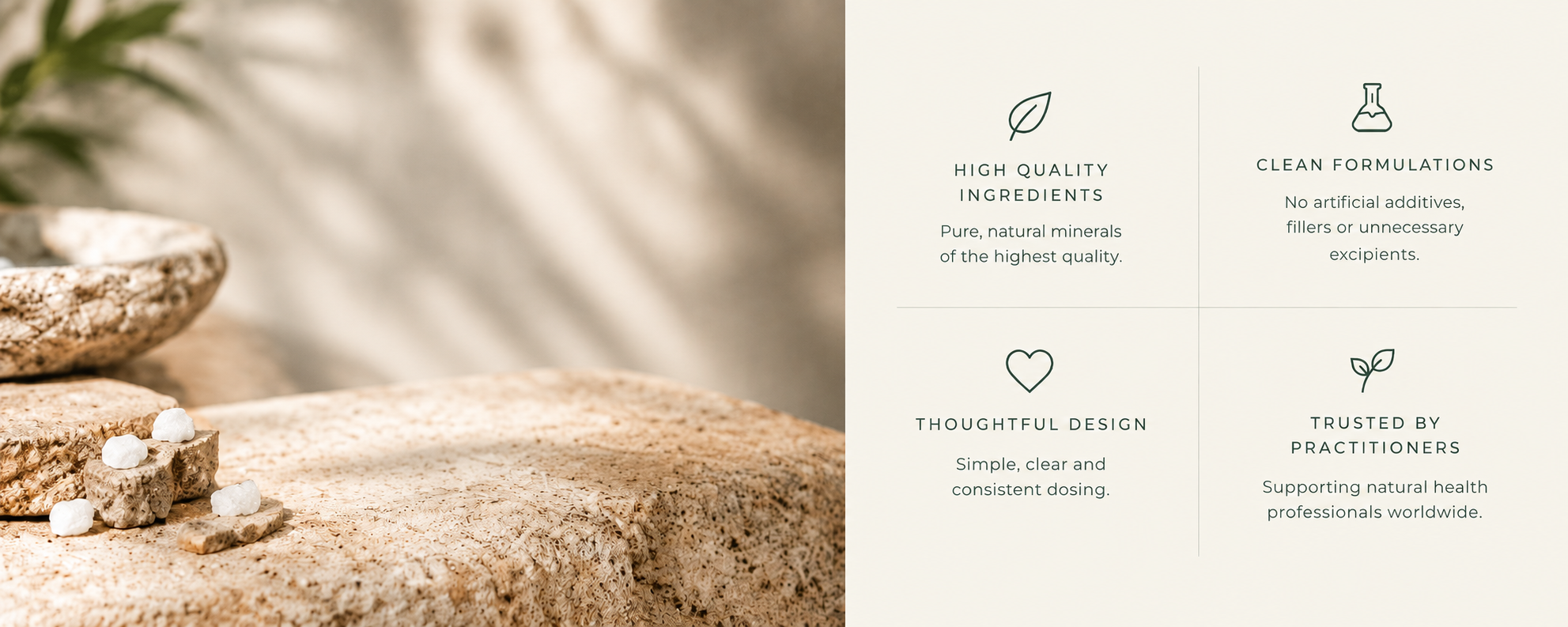
At bio by design, we believe in the power of natural minerals. Our tissue salts are carefully formulated to support your bodys natural balance - with simplicity, purity and integrity at the core of everything we do.